|
|
|
|
Lift to the Auditorium Ceiling
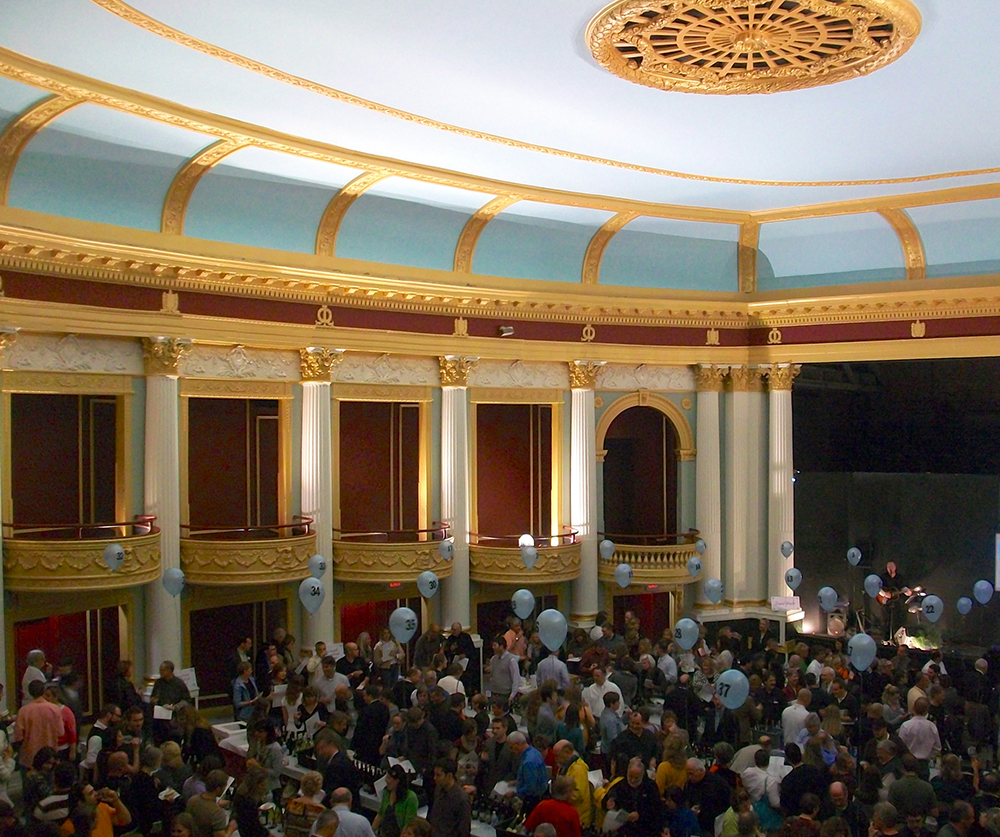
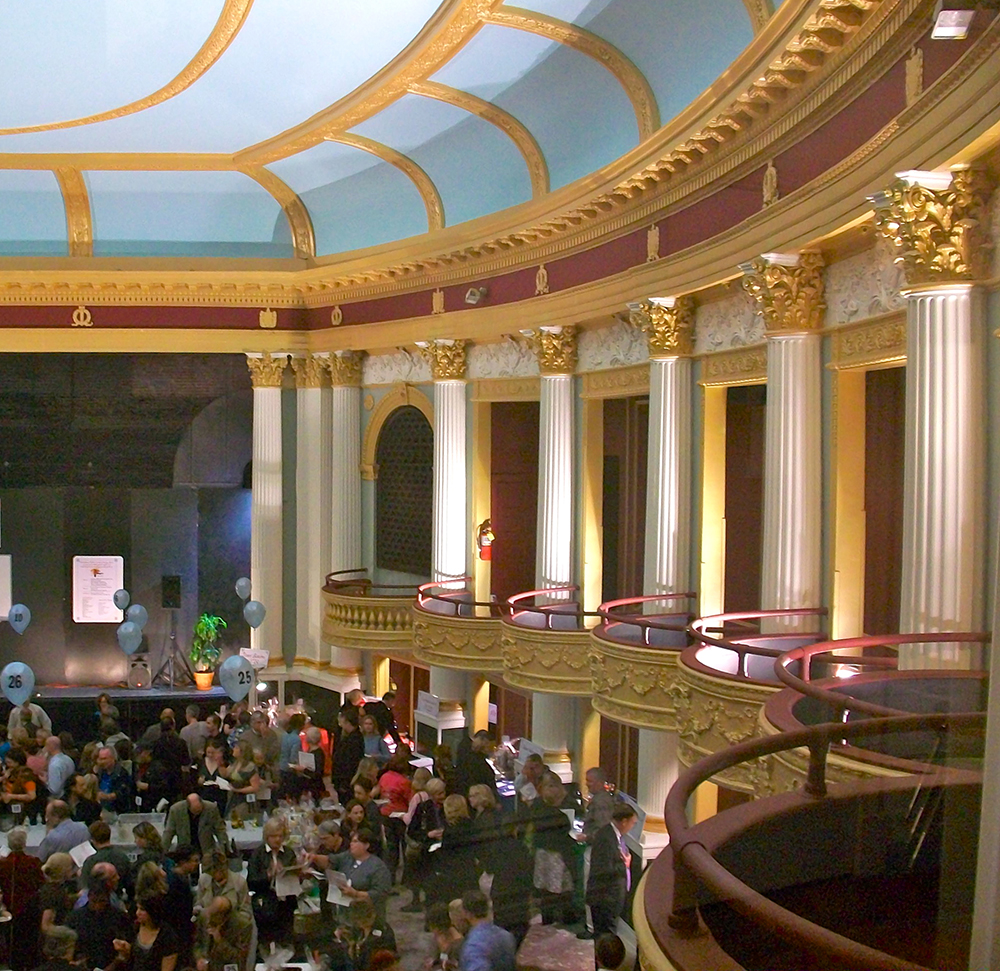
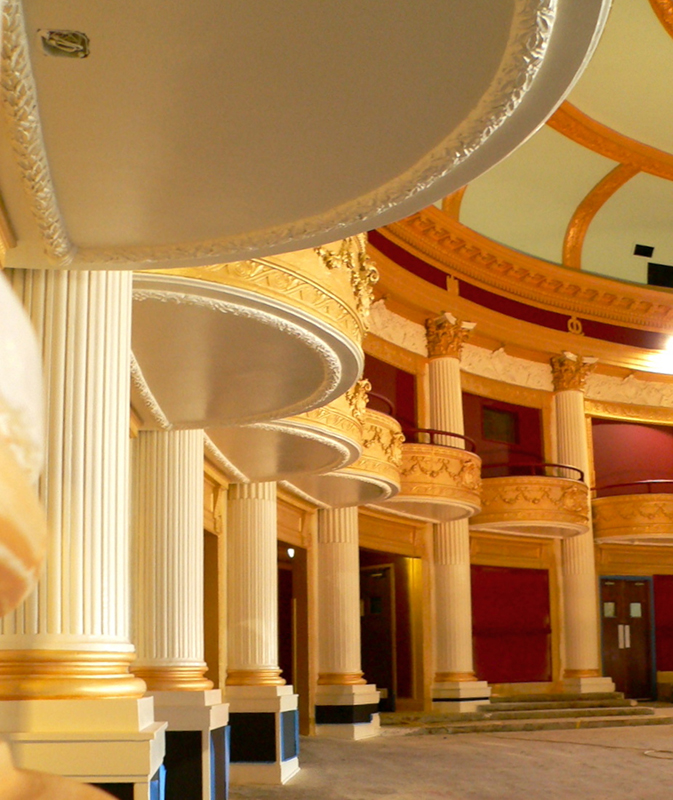
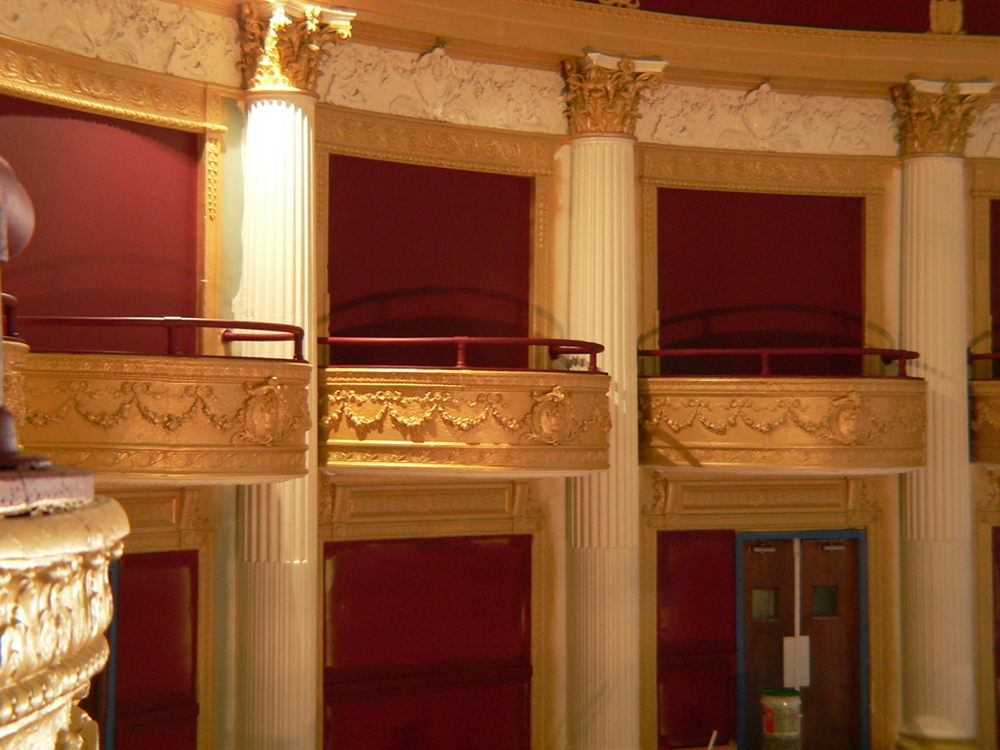
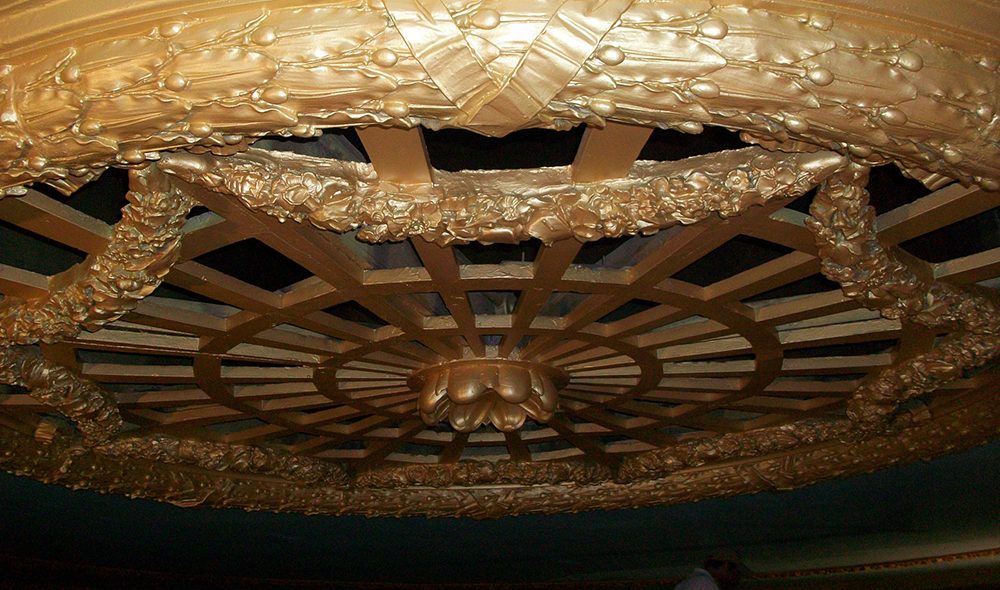
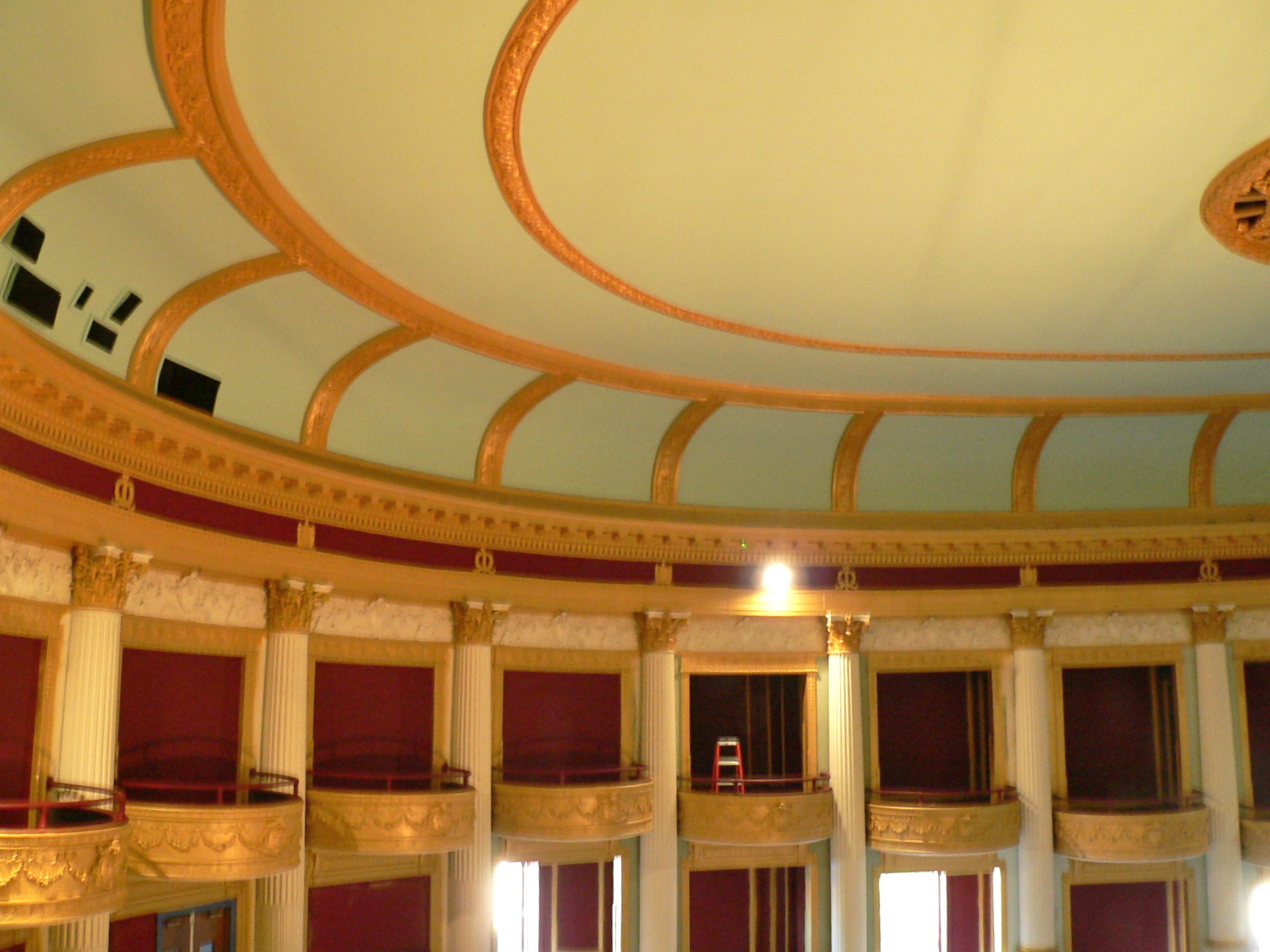
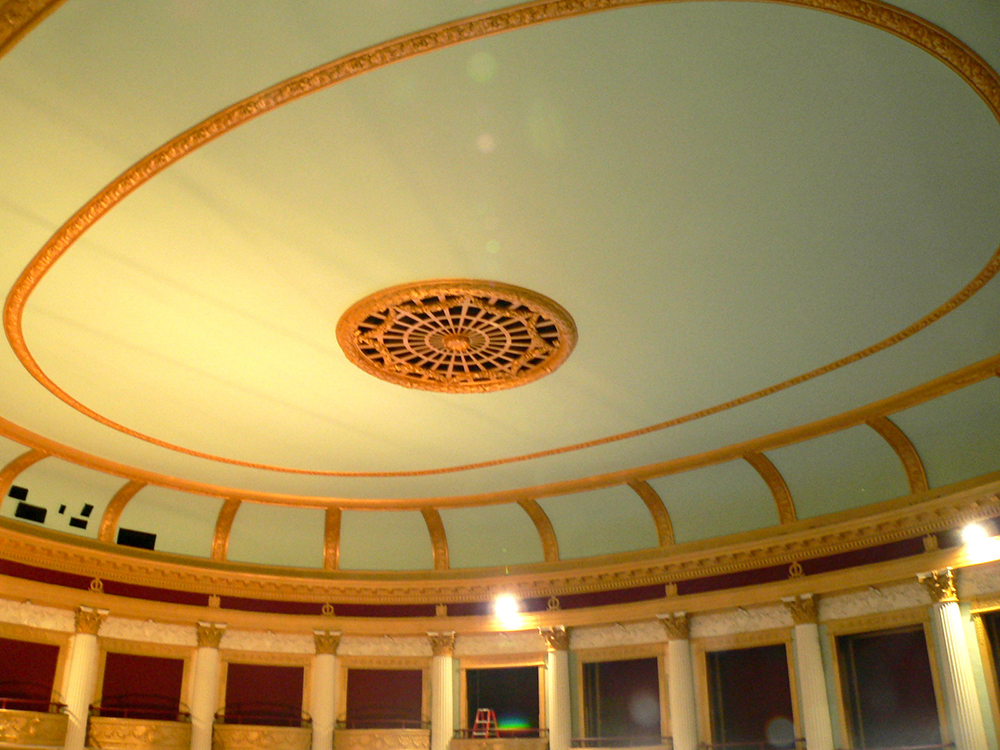
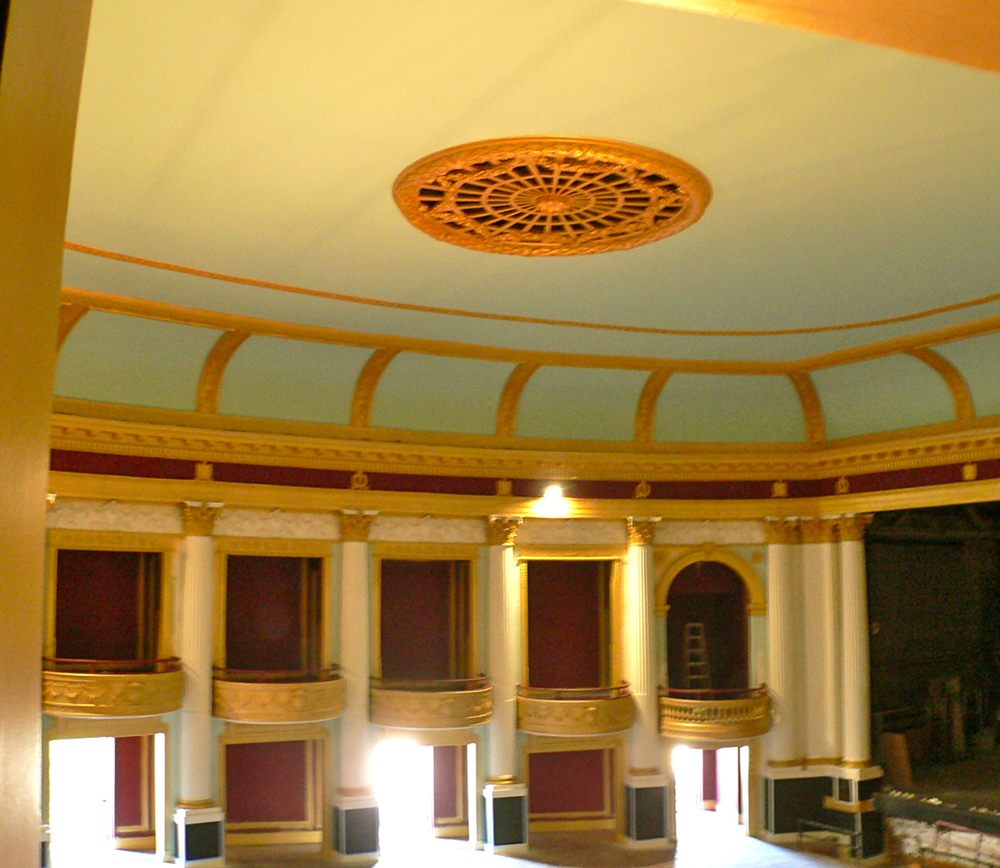
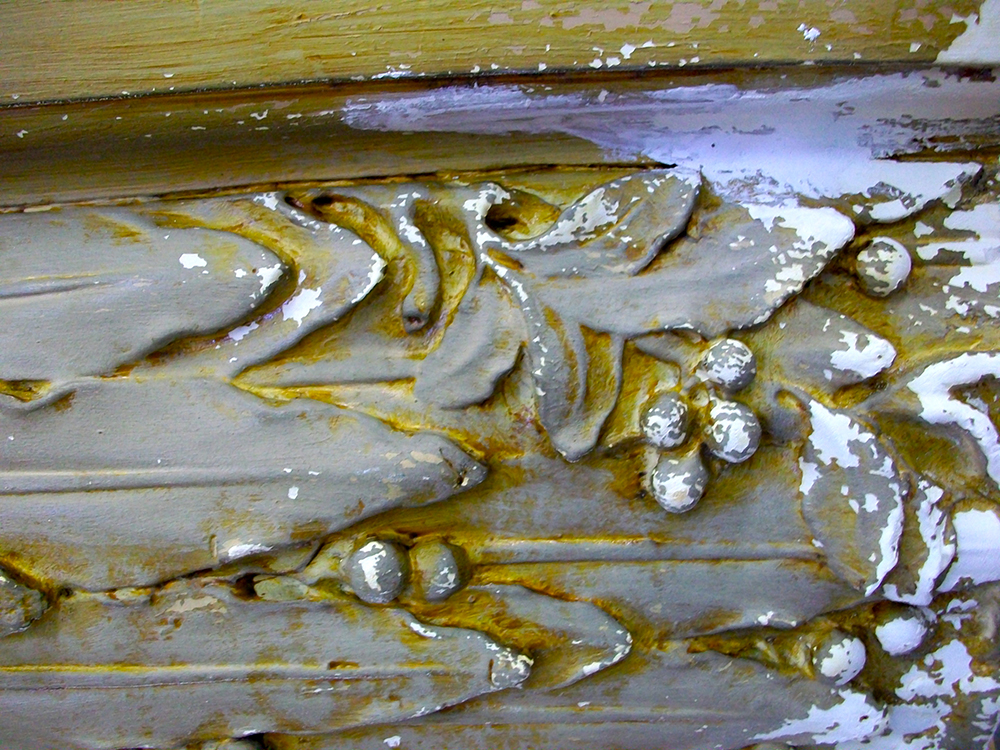
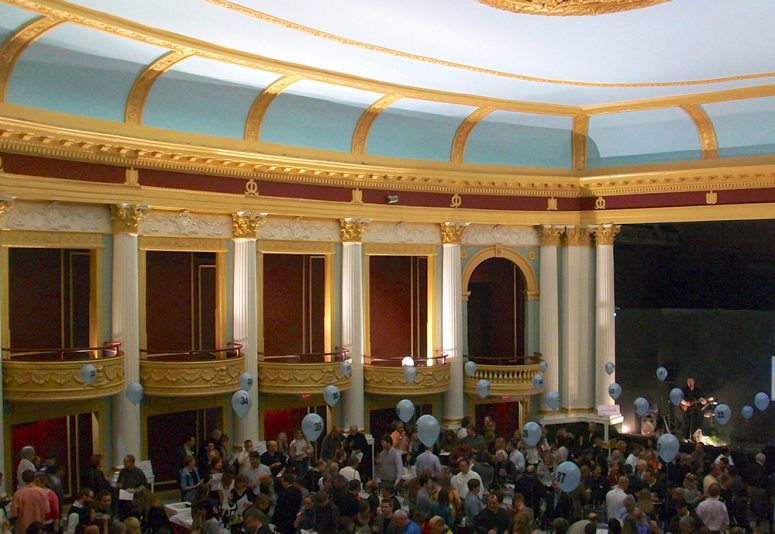
In February of 2009, New Prairie began work on the Orpheum Auditorium by removing mouldings from the ceiling to be used as templates for the new ones. Although these pictures look full of light, it was actually very dark and very cold in the unheated, unlit space.
Note: The words "molding" and "moulding" are the same, but we have used the primarily British "moulding." Also, "moulding" can be used interchangeably with just plain "mould."
|
|
|
|
|
|
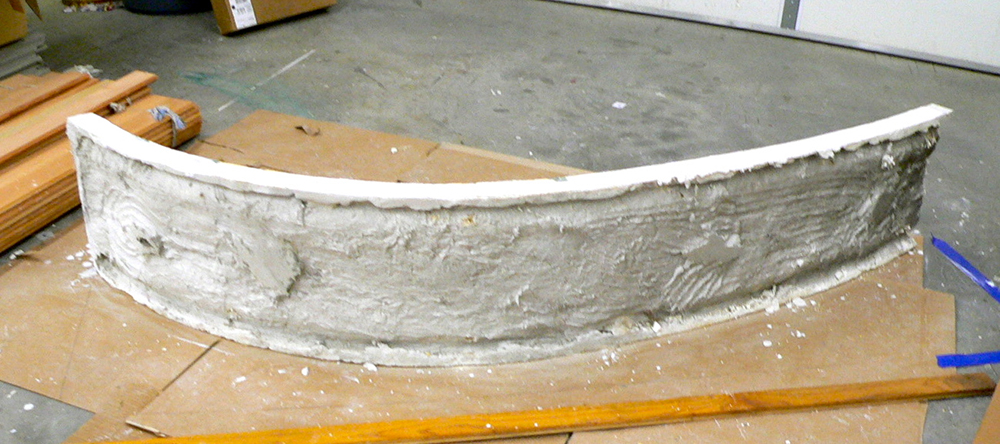
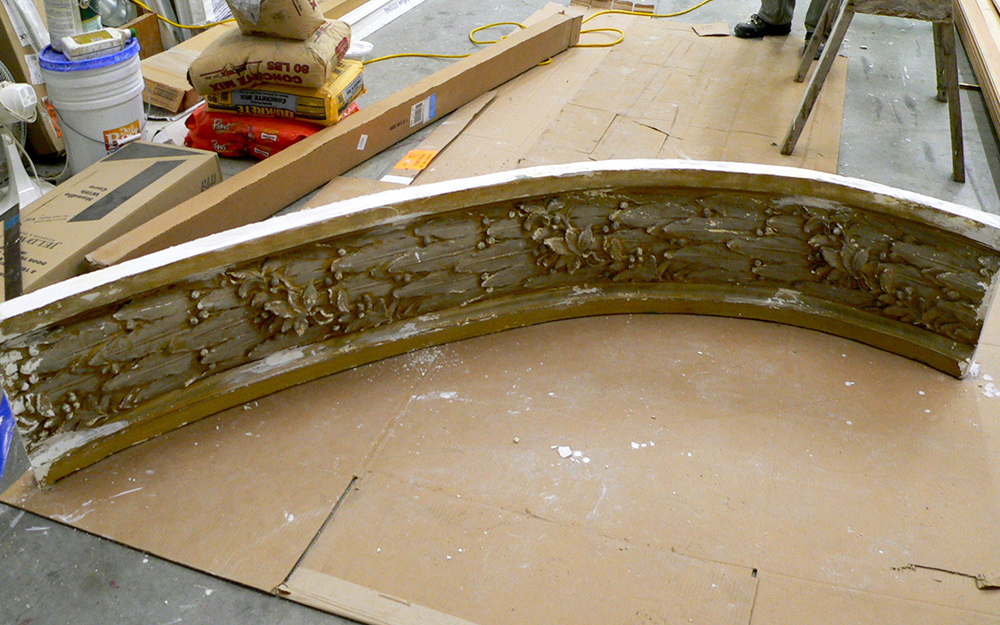
Back side of curved moulding
The mouldings were transported to our shop, where work began recreating the missing ones. The "rib" seen here was roughly 8' x 2'. The smallest of the ceiling mouldings was 5' x 1'.
|
|
|
Front side of curved moulding
|
|
|
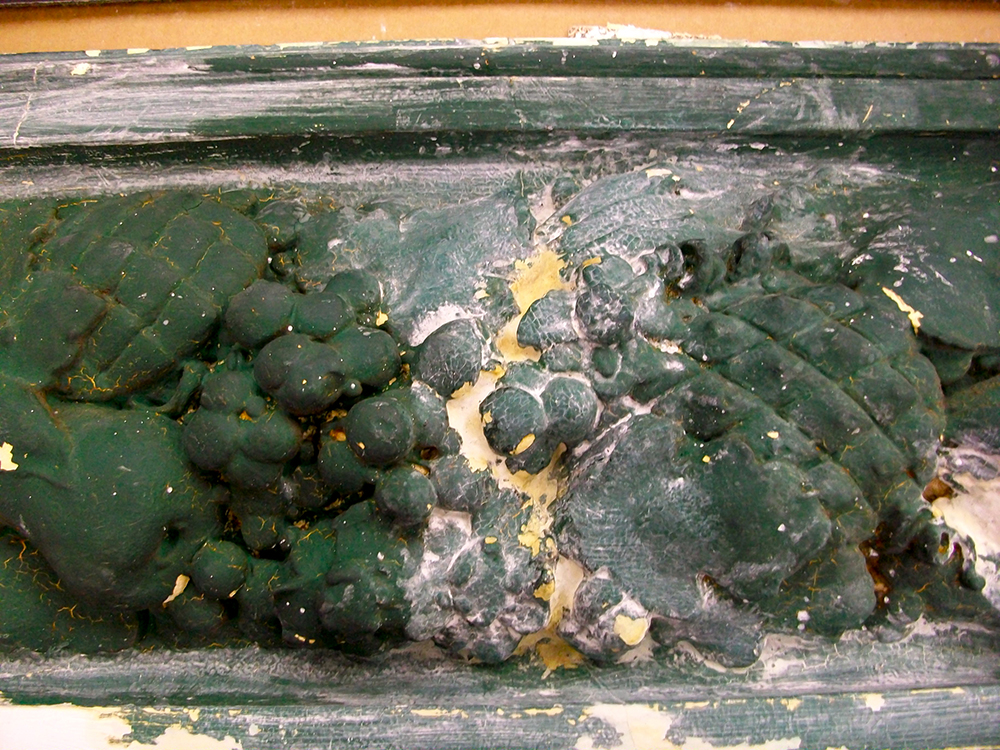
Detail of curved moulding
|
|
|
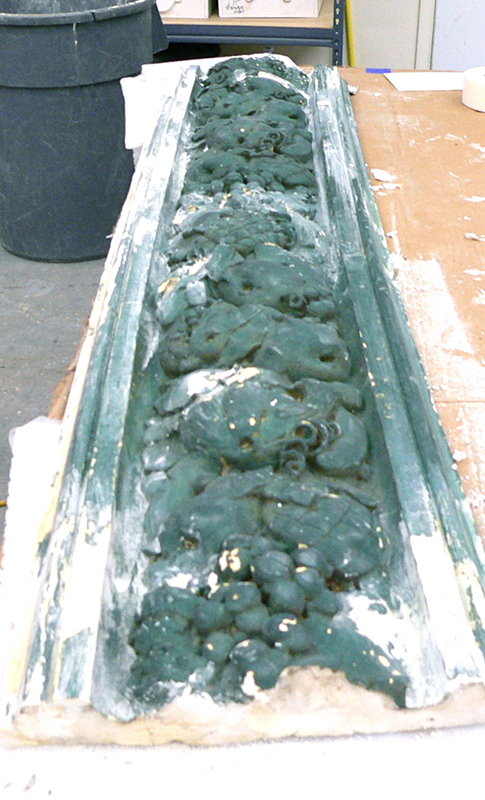
Straight green moulding
Some of the original mouldings needed repair work where they were crumbling.
|
|
|
|
|
|
Mixing the latex for use on the original moulding. The yellow is like dough; the blue is very sticky. Once they are mixed, they are bright green.
The original moulding is shellacked first, to make it easier to peel off the hardened latex.
|
|
|
U of I Historic Restoration class
A University of Illinois restoration class was invited to learn the process of recreating the mouldings. Here they are painting on the blended latex with small paintbrushes. Care must be taken to fill every crack and crevice to get an accurate representation of the original.
|
|
|
|
|
|
|
|
|
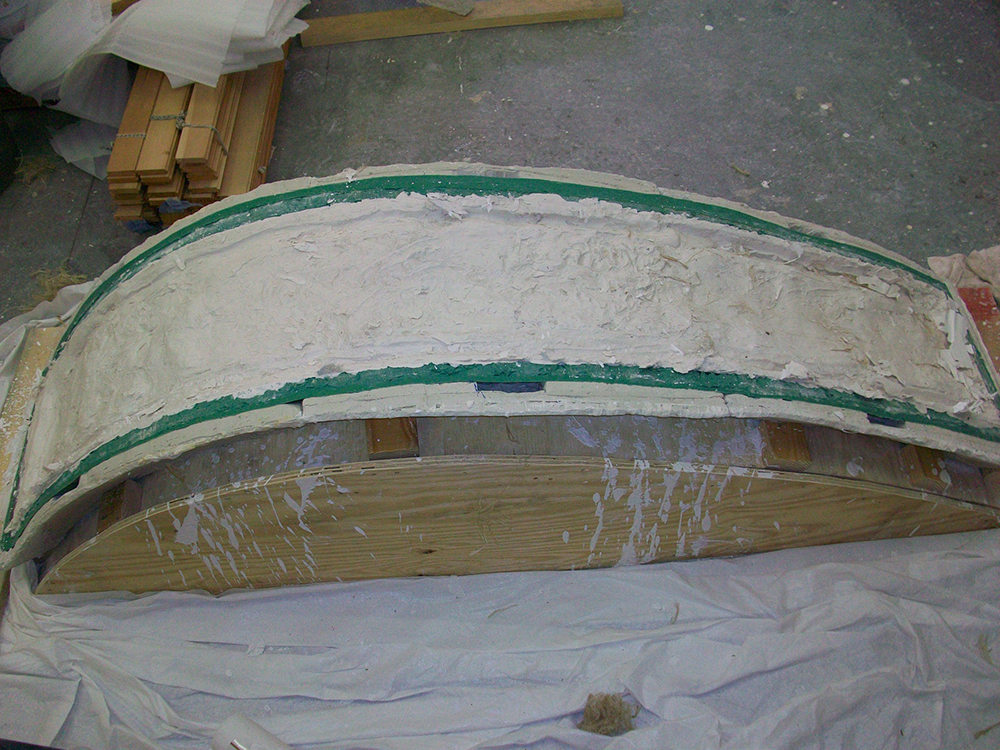
We mixed Gypsolite, a lightweight gypsum basecoat plaster with perlite aggregate, to make the "mother moulds."
|
|
|
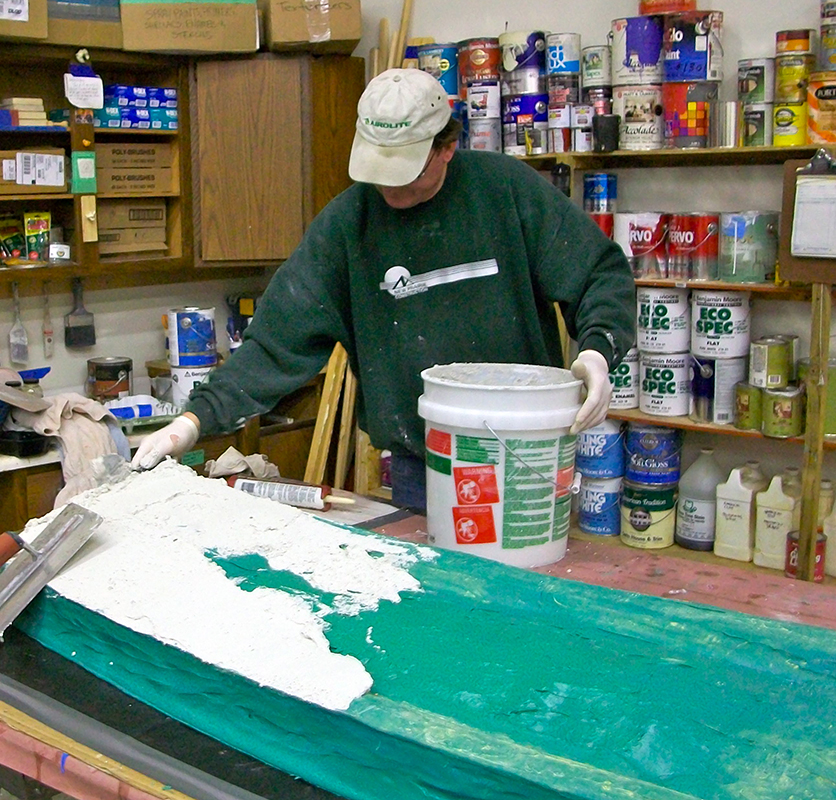
Troweling on the first layer of Gypsolite.
|
|
|
Scratch coat of Gypsolite
Now we have the original, a layer of latex, and the layers of Gypsolite. The Gypsolite will constitute the "mother mould." Once it is all dry, the whole thing will be flipped, and the original will be removed. Then plaster mixed with jute will be applied to the latex to form a new moulding.
|
|
|
Hardened latex
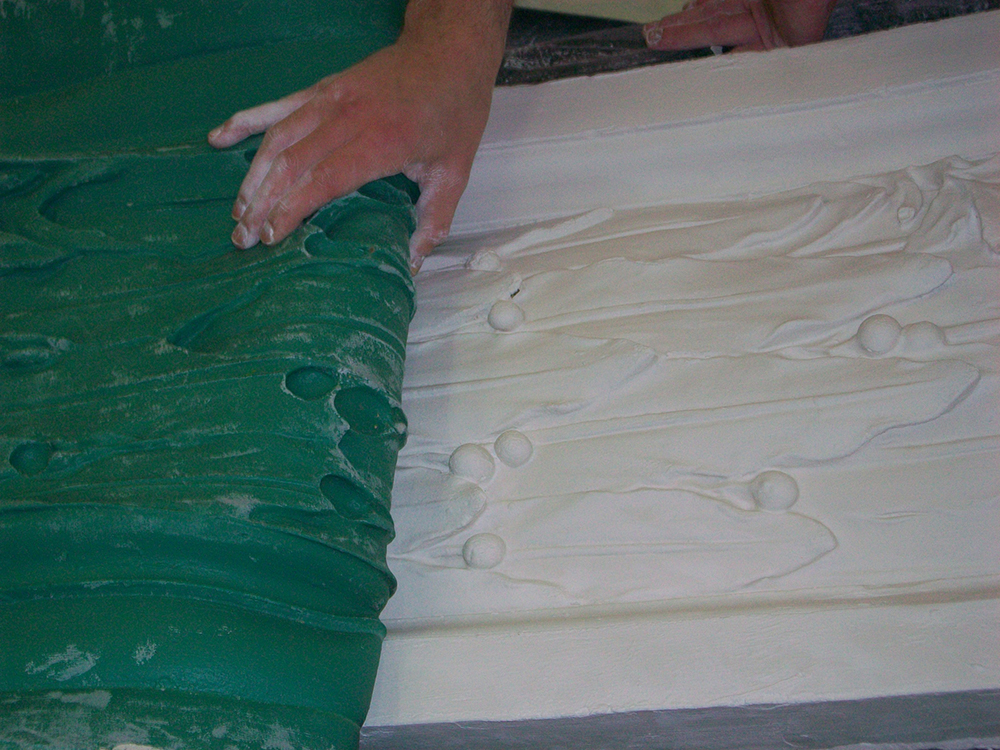
Once the latex hardens and the original moulding is removed, it is ready for plaster. Here it is sitting in the mother mould.
|
|
|
The first layer of plaster is applied. Precautions were taken to avoid plaster getting in between the mother mould and the latex layer.
|
|
|
Jute is added to the second, thicker coat to make it stronger.
|
|
|
Giant bag of jute fibers
The pile of jute was just the right size for breaktime napping!
|
|
|
|
|
|
Once the plaster is dry, the whole piece is flipped on to its side and the mother mould is pryed gently away. Then the latex is peeled from the finished moulding.
|
|
|
Detail of finished moulding
|
|
|
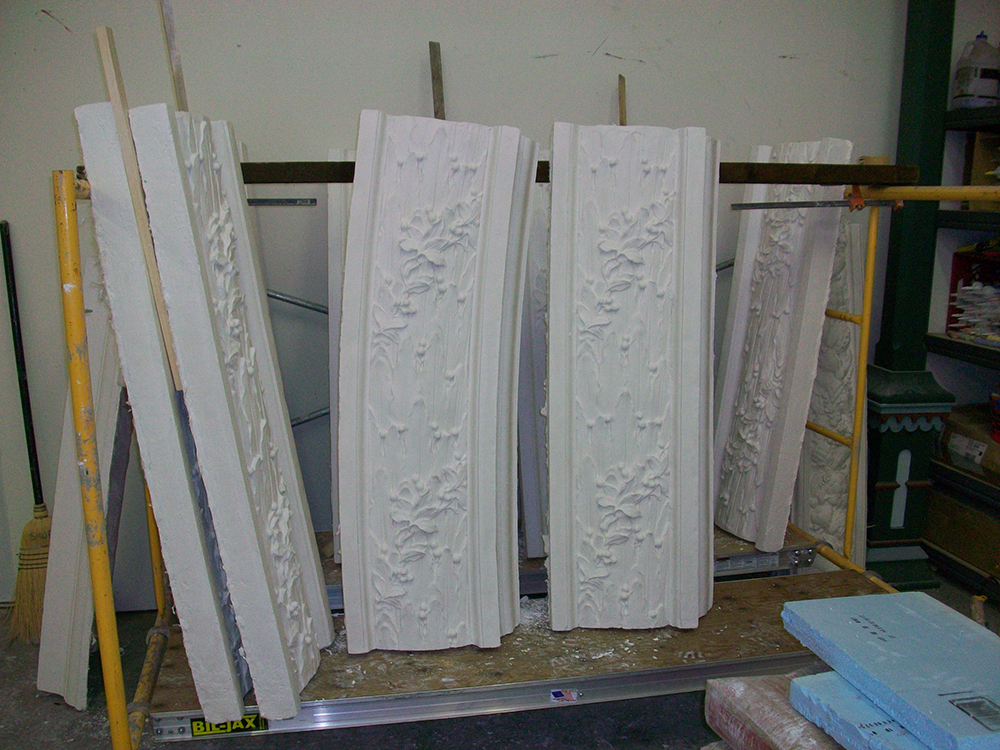
Finished mouldings spent weeks in the shop curing before they were installed.
|
|
|
Finished mouldings installed and painted
|
|
|
Bullseye with latex
The same process was applied in miniature to some of the bullseyes over the doorways.
|
|
|
|